By the Lily Campbell Team
Buying a historic home in Fountain Valley is not like buying any other property. These homes carry a distinct character; original moldings, aged hardwood floors, and architectural details that newer construction simply cannot rival. Even so, owning a piece of history comes with a responsibility that goes beyond typical homeownership. Maintenance, renovation, and preservation all operate by a different set of rules when your home has decades of history baked into its walls.
Fountain Valley's older housing stock, much of it built during the mid-century boom of the 1950s through 1970s, reflects the character of a city that grew alongside the rest of Orange County. Whether your home sits in one of the city's established neighborhoods or carries a designation that ties it to California's broader historic record, understanding what it takes to properly care for it will save you money, preserve its value, and protect the features that make it special in the first place.
Key Takeaways
- Historic homes in Fountain Valley often require specialized maintenance approaches for original systems, including plumbing, electrical, and structural elements.
- Replacing original features like windows and hardwood floors requires careful research to ensure work meets both historic preservation standards and local permitting requirements.
- Aging systems, such as knob-and-tube wiring and galvanized plumbing, are common in older homes and should be evaluated by licensed specialists before they become urgent repairs.
Understanding What "Historic" Actually Means
Not every older home carries a formal historic designation, but understanding the distinction matters. In California, a property can be considered historically significant at the local, state, or national level, each carrying its own set of implications for what you can and cannot do during renovation.
Orange County and individual cities can place properties on a local historic register, which may trigger design review requirements before you make exterior changes. At the state level, the California Register of Historical Resources recognizes properties connected to events, architecture, or individuals of significance to California's history. Federal recognition through the National Register of Historic Places carries the broadest set of implications and the greatest access to incentives.
If your Fountain Valley home does not carry a formal designation, you still benefit from understanding its age and original construction. Homes built before 1978 may contain lead-based paint. Homes built before the mid-1980s may have asbestos-containing materials in insulation, floor tiles, or roofing. Knowing your home's history guides every maintenance and renovation decision that follows.
Orange County and individual cities can place properties on a local historic register, which may trigger design review requirements before you make exterior changes. At the state level, the California Register of Historical Resources recognizes properties connected to events, architecture, or individuals of significance to California's history. Federal recognition through the National Register of Historic Places carries the broadest set of implications and the greatest access to incentives.
If your Fountain Valley home does not carry a formal designation, you still benefit from understanding its age and original construction. Homes built before 1978 may contain lead-based paint. Homes built before the mid-1980s may have asbestos-containing materials in insulation, floor tiles, or roofing. Knowing your home's history guides every maintenance and renovation decision that follows.
Questions to Research Before You Renovate
- Whether your property is listed on any local, state, or national historic register.
- What permits are required for structural, electrical, or plumbing changes to older homes.
- Whether any previous owner made unpermitted modifications that could affect future renovation plans.
- What your homeowner's insurance covers regarding original and historically significant materials.
Electrical and Plumbing: The Systems That Demand the Most Attention
Two systems tend to define the maintenance reality of historic homeownership: electrical and plumbing. Both were installed according to standards that are now decades out of date, and both require thoughtful, proactive management rather than a “wait-and-see” approach.
Knob-and-tube wiring, which was standard in homes built before the 1950s, is still present in some of Fountain Valley's older properties. This system lacks a grounding wire, making it difficult to add circuits, and is not compatible with modern insulation practices. Most insurance carriers will not cover a home with active knob-and-tube wiring, or they may charge substantially higher premiums. Replacing it is an investment, but it is one of the most important safety and financial decisions that a homeowner can make in an older space.
On the plumbing side, galvanized steel pipes were standard through much of the mid-20th century. Over time, galvanized pipes corrode from the inside out, reducing water pressure and eventually leading to leaks or failures. If your home still has its original galvanized supply lines, a licensed plumber's assessment should be among your first priorities.
Knob-and-tube wiring, which was standard in homes built before the 1950s, is still present in some of Fountain Valley's older properties. This system lacks a grounding wire, making it difficult to add circuits, and is not compatible with modern insulation practices. Most insurance carriers will not cover a home with active knob-and-tube wiring, or they may charge substantially higher premiums. Replacing it is an investment, but it is one of the most important safety and financial decisions that a homeowner can make in an older space.
On the plumbing side, galvanized steel pipes were standard through much of the mid-20th century. Over time, galvanized pipes corrode from the inside out, reducing water pressure and eventually leading to leaks or failures. If your home still has its original galvanized supply lines, a licensed plumber's assessment should be among your first priorities.
What a Licensed Inspection Should Cover
- A full evaluation of the electrical panel and any visible wiring, with specific attention to knob-and-tube or aluminum wiring.
- Assessment of supply and drain lines, including water pressure, pipe material, and signs of interior corrosion.
- Inspection of the foundation for settling, cracking, or moisture intrusion common in older slab or raised-foundation construction.
- Evaluation of the roof system and any original chimney or fireplace structure.
Preserving Original Features Without Compromising Them
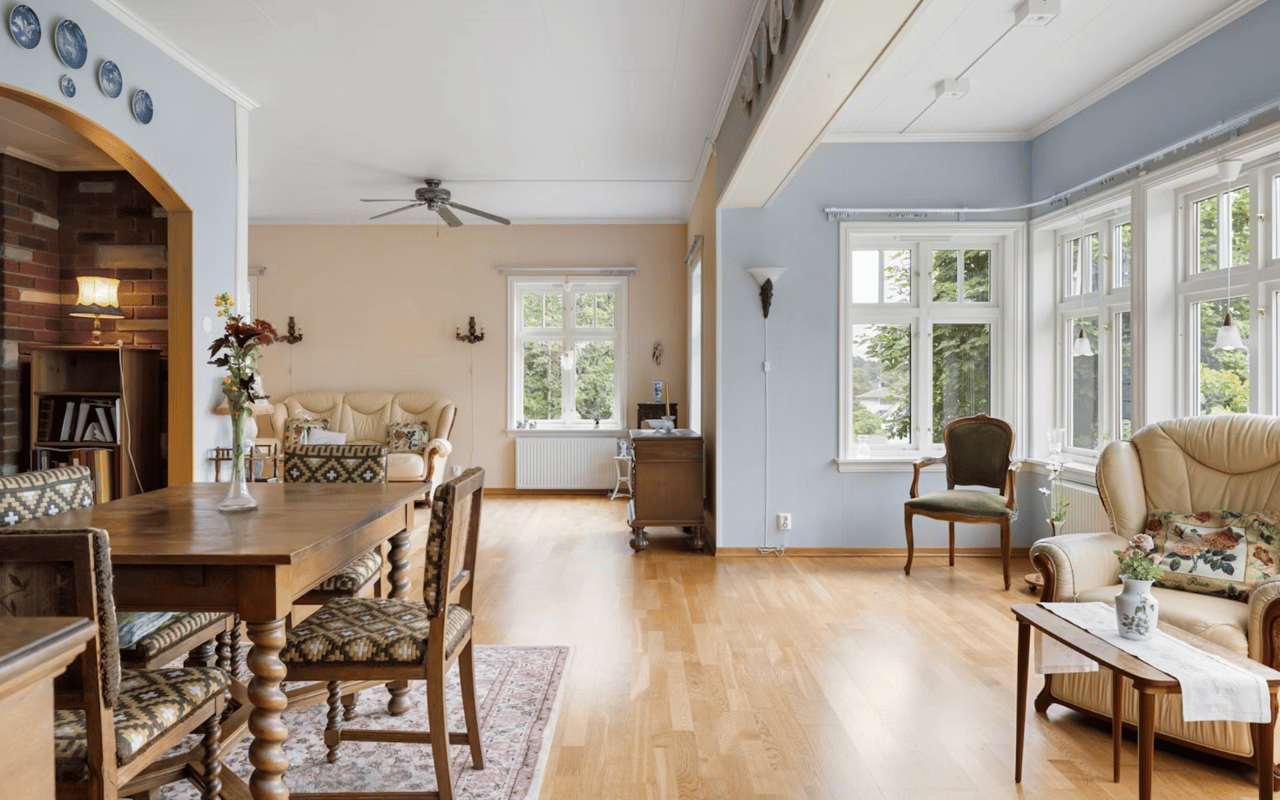
One of the great appeals of a historic home is the material quality of its original features. Original-growth hardwood floors, plaster walls, single-pane wood windows, and period hardware were built with standards that differ from modern production. Preserving these charming features is both an aesthetic and a financial priority; they contribute significantly to a historic home's resale value and its overall appeal.
The challenge is knowing when to restore and when replacement is unavoidable. Original hardwood floor restoration, for example, is almost always preferable to replacement. Floors that appear worn may simply need professional sanding and refinishing. Structural damage, warping, or subfloor issues are more complex and may require selective board replacement using salvaged or period-appropriate materials.
Original wood windows are another area where the instinct to replace is often premature. While older single-pane windows are less energy-efficient than modern double-pane units, they can often be restored and weatherstripped to improve performance while retaining the home's architectural character. If your home carries a historic designation, replacement windows must typically meet standards set by the Secretary of the Interior's Standards for Rehabilitation, which prioritize visual and material compatibility.
The challenge is knowing when to restore and when replacement is unavoidable. Original hardwood floor restoration, for example, is almost always preferable to replacement. Floors that appear worn may simply need professional sanding and refinishing. Structural damage, warping, or subfloor issues are more complex and may require selective board replacement using salvaged or period-appropriate materials.
Original wood windows are another area where the instinct to replace is often premature. While older single-pane windows are less energy-efficient than modern double-pane units, they can often be restored and weatherstripped to improve performance while retaining the home's architectural character. If your home carries a historic designation, replacement windows must typically meet standards set by the Secretary of the Interior's Standards for Rehabilitation, which prioritize visual and material compatibility.
Original Features Worth Protecting
- Wood window frames and sashes, which can be restored with glazing compound, weatherstripping, and refinishing rather than replaced.
- Plaster walls and ceilings, which provide superior soundproofing and fire resistance compared to modern drywall when properly maintained.
- Period-appropriate hardware on doors, cabinets, and built-ins, which adds character that cannot be replicated with reproduction hardware.
- Original tile work in kitchens and bathrooms, which often uses materials that are no longer manufactured and may be irreplaceable if damaged.
FAQs
Can I Renovate a Historic Home in California?
Yes, but the rules depend on whether your home carries a formal designation and the nature of the renovation. Exterior changes to designated properties often require design review to ensure compatibility with the home's historic character. Interior changes are generally less restricted. Working with a preservation architect and pulling the appropriate permits protects you from compliance issues down the line.
Is Knob-and-Tube Wiring Dangerous?
Knob-and-tube wiring is not inherently dangerous if it is intact and unmodified, but it presents risks in older homes where insulation has been added over it, circuits have been extended, or the wiring has deteriorated with age. Most insurance carriers treat it as a liability. Having it professionally evaluated is a necessary step in any older home purchase or ownership.
Protecting Your Investment for the Long Haul
A historic home in Fountain Valley is a property worth caring for the right way. When you understand how its systems work, which materials require specialized maintenance, and what programs exist to support preservation, the process becomes far less overwhelming and far more rewarding. The homes that hold their value and their character decade after decade are the ones whose owners treated them not as renovation projects but as ongoing stewardships.
Our experts at the Lily Campbell Team work with buyers and homeowners throughout Fountain Valley and the broader Orange County area, including those navigating the distinct realities of older and historic properties. We can connect you with the right inspectors, walk you through what to look for before making an offer, and help you understand how a home's age affects both its maintenance needs and its long-term value.
Our experts at the Lily Campbell Team work with buyers and homeowners throughout Fountain Valley and the broader Orange County area, including those navigating the distinct realities of older and historic properties. We can connect you with the right inspectors, walk you through what to look for before making an offer, and help you understand how a home's age affects both its maintenance needs and its long-term value.