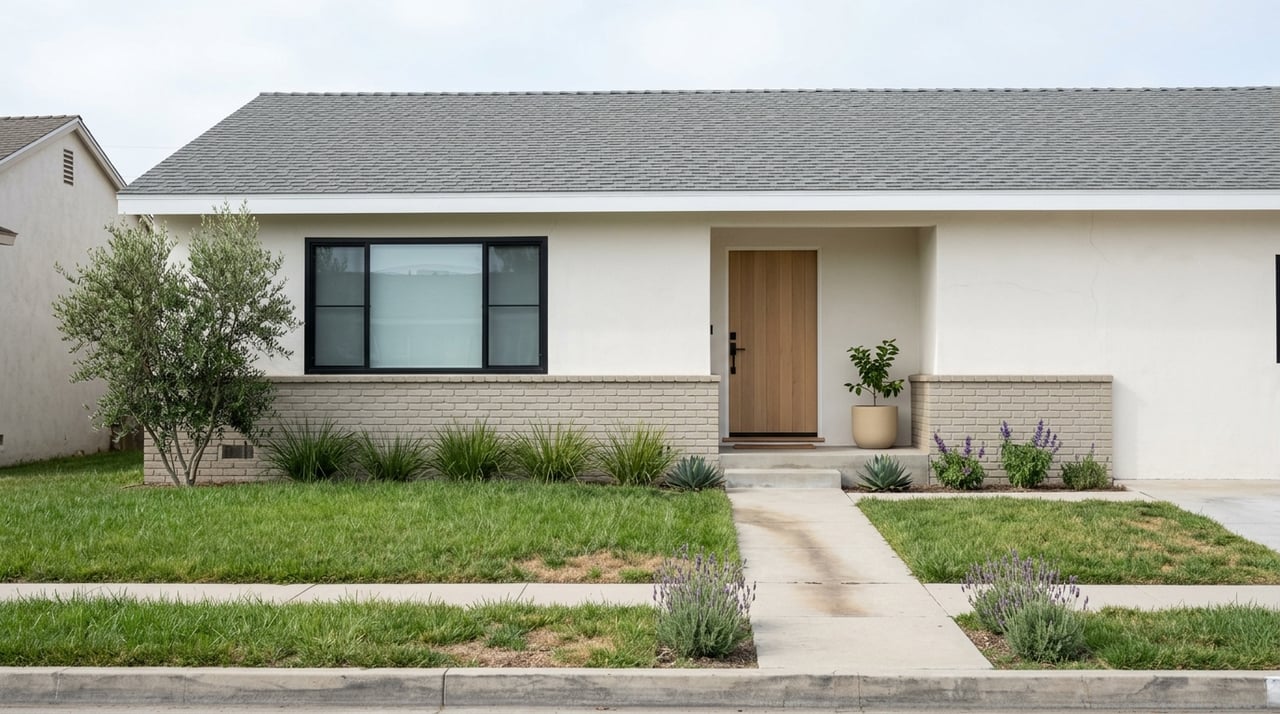
If you are house hunting in Garden Grove, one of the biggest questions is not just what can you afford, but what kind of setting fits your life. In this city, home style and neighborhood layout often go hand in hand, and that can shape everything from privacy and parking to walkability and future resale appeal. When you understand how Garden Grove grew and where different housing types tend to cluster, you can narrow your search faster and make a more confident decision. Let’s dive in.
Why Garden Grove Feels So Varied
Garden Grove has a layered housing story. According to the City of Garden Grove history page, the city’s largest growth cycle began after World War II, when returning soldiers and young families helped fuel a major suburban expansion. That history still shows up today in the city’s street patterns, lot layouts, and housing mix.
At the same time, Garden Grove is not standing still. The city describes itself as a mix of established neighborhoods and newer housing developments, while its housing element identifies it as a largely built-out community with limited vacant residential land. In practical terms, that means you will often see older interior neighborhoods paired with newer infill and mixed-use projects closer to major streets.
Current housing data reinforces that suburban foundation. The 2024 Census QuickFacts for Garden Grove show a 53.1% owner-occupied housing rate, a median owner-occupied home value of $814,100, and a median gross rent of $2,012. The city’s housing element also reports that in 2021, 57.1% of housing units were detached single-family homes, which helps explain why many buyers still associate Garden Grove with a classic neighborhood feel.
Detached Homes in Interior Neighborhoods
If you picture a more traditional suburban setting, detached homes in interior neighborhoods are usually the clearest match. The city’s Land Use Element says Low Density Residential areas are intended for detached homes on their own parcels, and this category makes up most of Garden Grove’s housing.
Because the city’s major expansion happened in the postwar period, many of these neighborhoods feel like mid-century tract suburbs. While that is not a formal architectural label from the city, it is a reasonable way to think about the older housing pattern. You may notice broad residential blocks, more separation from commercial traffic, and a stronger detached-lot feel than in denser parts of the city.
For many buyers, these areas offer the most familiar suburban layout. Streets tend to feel more residential, and homes are often set away from the major commercial corridors where newer density is being added. If your priority is a classic single-family search, these interior sections are often where you will want to focus first.
Condos, Townhomes, and Small-Lot Living
Garden Grove also has a meaningful attached-housing segment. The city’s land-use policies allow for a broader mix in Low Medium Density and Medium Density areas, including single-family homes, ADUs, duplexes, triplexes, detached condos, townhomes, apartments, and small-lot subdivisions, according to the Land Use Element.
This matters if you want a lower-maintenance option or a newer product type. The city’s housing element notes that from 2010 to 2020, new development was mostly detached or attached single-family housing, but Garden Grove also saw duplex and triplex conversions along with smaller apartment and condo redevelopment. That gives buyers more variety than they might expect from a city often thought of mainly as a detached-home market.
In day-to-day terms, attached housing can mean a different ownership experience. Shared walls, common parking areas, and managed exterior spaces are more common in these developments. That setup may appeal to buyers who value convenience, but it is smart to compare monthly ownership costs and community rules carefully before you buy.
Newer Infill and Mixed-Use Areas
If you are hoping for newer construction or a more urban-style setting, infill and mixed-use areas deserve extra attention. Garden Grove’s planning documents say most new development is expected along major arterial roadways or near existing shopping centers, while existing residential neighborhoods are meant to be preserved.
One of the clearest examples is Brookhurst Place in OC Koreatown. The project is planned for up to 700 residential units along with retail, a hotel, a park, and an urban trail. Its fact sheet outlines 180 apartments in Phase I, up to 462 additional apartments in Phase II, and 58 for-sale condominiums.
Other recent projects also show the range of newer housing forms. The city highlights Gardenia, a 70-home detached single-family community near the 22 Freeway and Lewis Street, as well as Bria, a 31-unit townhome development. These examples show that “newer” in Garden Grove can mean anything from detached homes to townhomes to mixed-use residential living.
How Major Corridors Shape Layout
One of the most useful ways to read Garden Grove is by understanding the difference between interior neighborhoods and major corridors. The city’s planning strategy is to preserve established residential areas while directing more growth toward arterial streets and infill zones. That single idea explains a lot about why one block may feel quiet and residential while another feels more active and mixed.
Garden Grove Boulevard is a good example. The Land Use Element describes this corridor as a mix of older commercial properties, a lively Korean business district, residential planned developments, and newer commercial buildings. It also notes higher-density nodes at major intersections, with smaller residential pockets on side streets like Shackelford Lane, Abbott Court, and Village Road.
Other major layout markers include Harbor Boulevard, Euclid Street, Chapman Avenue, and Brookhurst Street. These areas are where you are more likely to encounter apartments, condos, townhomes, and mixed-use buildings instead of the detached tracts that define much of the city’s interior. If you are comparing homes online, understanding these corridor patterns can help you predict the feel of an area before you even schedule a showing.
What Buyers Should Notice on a Tour
When you tour homes in Garden Grove, pay attention to more than the floor plan. Street context can be just as important as square footage. A home set deeper inside a residential tract may feel very different from one near a major corridor, even if the asking prices are similar.
A few practical things to watch for include:
- Distance to major arterial roads
- Amount of commercial activity nearby
- On-street and off-street parking setup
- Whether the home is in a detached tract, planned unit development, or mixed-use setting
- The balance between privacy and access to shopping or transit
Parking is worth a close look in denser areas. The city specifically identifies on-street and off-street parking supply as a neighborhood issue in its planning documents. That means buyers should not assume parking will feel the same across all parts of Garden Grove.
HOA and Ownership Tradeoffs
Another key difference between home styles is the likelihood of HOA involvement. In practical terms, condos, townhomes, planned unit developments, and mixed-use communities are more likely to have homeowners associations because they depend on shared open space, parking, and common-area maintenance.
By contrast, older detached neighborhoods are often non-HOA or have lighter governance, though that should always be verified property by property. This is not a citywide rule, but it is a reasonable takeaway based on the housing types and development patterns described in the city’s planning documents.
For buyers, the real question is not whether HOA is good or bad. It is whether the tradeoff works for you. Some buyers prefer easier exterior upkeep and shared amenities, while others want more control, fewer monthly fees, and a more independent lot.
Districts Can Help You Orient
City district pages can also help you get your bearings as you search. According to the city’s district information page, District 1 is widely associated with West Garden Grove and includes the West Grove Business District. District 4 reaches the city’s Little Saigon area and includes the Garden Grove Auto Center and Historical Main Street near the old town core.
These district references are helpful because they give you a sense of how Garden Grove organizes its civic and commercial identity. They are not a shortcut for choosing a home, but they can make maps, listings, and local conversations easier to follow. When you pair that orientation with the city’s land-use patterns, your home search becomes much more strategic.
How to Match Style to Lifestyle
The best Garden Grove home for you often comes down to how you want to live day to day. If you want a conventional suburban setting, the highest-probability fit is usually in lower-density detached neighborhoods away from the busiest commercial streets. These areas often offer the strongest detached-home feel and less corridor exposure.
If you want newer construction, a more connected setting, or housing close to retail and activity, you may find a better match near Brookhurst, Harbor Boulevard, Garden Grove Boulevard, or the Civic Center and Main Street area. The city’s own planning framework supports that pattern by steering higher-density and mixed-use growth toward those corridors.
That is why the main tradeoff in Garden Grove is often not just price. It is context. Interior tract neighborhoods generally offer more privacy and a larger-lot feeling, while corridor-adjacent homes may offer easier access to shopping, transit, and newer housing options.
Whether you are buying your first home, moving up, downsizing, or relocating within Orange County, understanding these patterns can save you time and help you focus on neighborhoods that truly fit your goals. If you want guidance comparing Garden Grove home styles and surrounding Orange County options, the Lily Campbell Team is here to help you navigate the market with local insight and a practical strategy.
FAQs
What home styles are most common in Garden Grove?
- Detached single-family homes are the most common housing type in Garden Grove, with the city’s housing element reporting that 57.1% of housing units were detached single-family in 2021.
Where should you look for newer homes in Garden Grove?
- Newer homes and infill developments are more often found near major corridors and redevelopment areas, including parts of Brookhurst, Harbor Boulevard, Garden Grove Boulevard, and areas near the Civic Center and Main Street.
Are Garden Grove neighborhoods mostly detached homes or attached housing?
- Garden Grove has both, but most housing is still in low-density detached neighborhoods, while attached homes, condos, apartments, and townhomes appear more often in medium-density and corridor-focused areas.
Do Garden Grove condos and townhomes usually have HOAs?
- Condos, townhomes, planned unit developments, and mixed-use communities often have HOAs because they typically include shared spaces and common-area maintenance, but you should confirm this for each property.
How do major streets affect Garden Grove neighborhood layout?
- Major streets like Harbor Boulevard, Euclid Street, Chapman Avenue, Brookhurst Street, and Garden Grove Boulevard tend to have more commercial activity and higher-density housing, while interior areas are more likely to feel like traditional residential tracts.
Is Garden Grove a built-out city?
- Yes. The city’s housing element describes Garden Grove as a built-out community with limited remaining vacant residential land, which is one reason newer housing often appears as infill or mixed-use redevelopment rather than large new subdivisions.