196,010 people live in Huntington Beach, where the median age is 43.4 and the average individual income is $62,450. Data provided by the U.S. Census Bureau.
Total Population
Median Age
Population Density Population Density This is the number of people per square mile in a neighborhood.
Average individual Income
Huntington Beach, widely known as “Surf City USA,” is a coastal city in Orange County defined by its laid-back beach culture, strong outdoor lifestyle, and well-established residential neighborhoods. The city stretches along nearly ten miles of Pacific coastline, anchored by a wide sandy beach, a long pier, and an active downtown core. While surfing culture is central to its identity, Huntington Beach functions primarily as a full-scale residential city rather than a resort town, offering stable neighborhoods, local schools, and everyday amenities.
The overall vibe blends casual coastal living with suburban structure. Residents prioritize access to the beach, open space, and outdoor recreation, but also value privacy, quiet streets, and long-term livability. Neighborhoods range from walkable coastal enclaves near Main Street to larger master-planned communities inland with parks, greenbelts, and bike paths. The city’s flat layout and extensive trail system reinforce an active, car-light lifestyle for many residents.
Huntington Beach appeals to buyers seeking a balance between ocean access and long-term residential stability. It attracts people who want coastal living without the transient feel of tourist-heavy beach cities. Compared to nearby markets, it offers a more relaxed pace while remaining well-connected to employment centers in Orange County and greater Southern California.
Huntington Beach attracts residents whose lifestyles revolve around outdoor activity, coastal access, and long-term homeownership rather than short-term stays. Many residents are established professionals who value proximity to the coast while working in nearby business hubs such as Irvine, Costa Mesa, and Newport Beach. The city’s size and infrastructure support a year-round population rather than a seasonal one, which contributes to a strong sense of community.
Families are drawn to Huntington Beach for its neighborhood layout, local parks, and school access, particularly in inland and planned communities. These areas offer larger homes, quieter streets, and easy access to sports fields, trails, and everyday shopping. The coastal environment adds recreational value without dominating daily life, making it attractive for long-term family living rather than vacation use.
Retirees and downsizers are also well represented, especially those seeking an active but low-stress lifestyle. Many are drawn to single-story homes, coastal proximity, and walkable areas that support daily routines without heavy reliance on long commutes. The mild climate and outdoor amenities allow residents to remain active year-round.
Second-home buyers and lifestyle-driven purchasers tend to concentrate closer to the beach and downtown areas. These buyers often prioritize walkability, ocean access, and proximity to dining and entertainment over home size. While present, they do not dominate the market, reinforcing Huntington Beach’s identity as a lived-in coastal city rather than a purely vacation-oriented destination.
Huntington Beach is located along the central coast of Orange County, bordered by the Pacific Ocean to the west and surrounded by several major Southern California cities. It sits south of Seal Beach, west of Westminster and Fountain Valley, north of Newport Beach, and northwest of Costa Mesa. This positioning places the city roughly midway between Los Angeles and San Diego, making it well-situated within the broader Southern California coastal corridor.
The city’s terrain is predominantly flat, a defining feature that supports its extensive network of bike paths, walking trails, and wide residential streets. Unlike many coastal areas with cliffs or steep grades, Huntington Beach offers easy access from inland neighborhoods to the shoreline. The land gradually slopes toward the ocean, creating broad beaches and unobstructed coastal views in select areas rather than dramatic elevation changes.
Huntington Beach benefits from a classic Southern California coastal climate, characterized by mild temperatures year-round and limited seasonal variation. Ocean breezes help regulate temperatures, keeping summers cooler than inland Orange County and winters generally comfortable. Morning marine layers are common, especially in late spring and early summer, often giving way to clear afternoons.
Natural surroundings are a major part of the city’s appeal. The Pacific coastline serves as the dominant natural feature, complemented by wetlands, estuaries, and preserved open space. Bolsa Chica Ecological Reserve, located along the northern edge of the city, provides a rare coastal habitat with walking trails and wildlife viewing, offering a contrast to the urban beach environment. Together, the ocean, open sky, and preserved wetlands give Huntington Beach a spacious, outdoor-oriented feel despite its urban scale.
Huntington Beach’s real estate market in 2025 continues to be defined by high home values, constrained inventory, and competitive conditions that lean toward sellers but show signs of moderation compared to peak pandemic years. Median prices are elevated, with local data indicating values around the low-to-mid $1.3 million range for single-family homes, reflecting modest year-over-year growth or stabilization rather than rapid escalation.
Home Prices: Median listing and sale prices in Huntington Beach have held strong above $1.3M in 2025, with some local reporting near $1.5M in late 2025 and modest year-over-year increases in certain months. Sellers generally maintain pricing expectations close to recent market highs, though broader Orange County metrics show median prices stable with slight gains or softening depending on timing.
Inventory Trends: Inventory remains limited relative to demand. Active listings in Huntington Beach are below typical levels for non-peak conditions, constraining options for buyers and contributing to sustained competition. Some years-over-year comparisons show slight declines in available homes for sale, driven by homeowners remaining in place because of favorable low mortgage rates.
Days on Market: Homes in Huntington Beach tend to sell relatively quickly compared with national averages, though time on market has edged upward from historically rapid turnover. Median days on market is in the range of low-to-mid 40s to low 50s, indicating that while buyers still move decisively on listings, there is slightly more time for decision making than earlier in 2025.
Appreciation Trends: Appreciation in Huntington Beach has moderated in 2025. Year-over-year changes show small positive movement in typical home values, with growth rates much lower than the double-digit increases seen earlier in the decade. Orange County trends point to stabilized pricing with modest gains, influenced by broader economic conditions and shifts in buyer demand.
Buyer/Seller Conditions: Overall market conditions continue to favor sellers, particularly for well-priced homes in desirable locations, but the balance has softened relative to prior years. Sale-to-list price ratios near 99 percent illustrate that buyers can negotiate more effectively than in an overheated market, and price reductions or extended listing times are more common than at market peaks. Limited inventory and high prices maintain seller leverage, but extended days on market and cautious buyer behavior reflect a nuanced balance rather than a uniform seller dominance.
The Huntington Beach real estate market in 2025 remains high-value and competitive with constrained inventory and moderate appreciation. Buyers should be prepared for limited options and strategic pricing, while sellers still benefit from strong demand—but must price appropriately to align with current market dynamics.
Huntington Beach offers a broad range of residential property types that accommodate diverse preferences, from traditional family living to more compact, low-maintenance options. Single-family homes constitute the core of the market, especially in inland and established neighborhoods. These properties range from modest ranch and mid-century beach cottages to larger, contemporary residences on larger lots. Waterfront single-family homes and luxury estates near the harbour or beachfront areas represent the upper end of the market, often commanding premium prices and panoramic views.
Condominiums and apartments provide more accessible ownership and rental opportunities, particularly near the beach and in walkable districts like downtown. These range from smaller one- and two-bedroom units in mid-rise buildings to larger, modern condos with amenities and community facilities. Many of these are located within minutes of the shoreline, appealing to buyers prioritizing convenience and low-maintenance living.
Townhomes and townhouses occupy a middle ground between condos and detached homes, offering multi-level living with shared walls but often with private garages, small yards, or patios. These are found throughout the city and include both older stock and newer developments. They typically appeal to buyers seeking more space and privacy than a condo without the full scale of a detached home.
Multi-family properties, such as duplexes, triplexes, or small apartment buildings, exist primarily as investment opportunities or for multi-generation living arrangements, though they represent a smaller portion of the total housing stock.
Across these categories, architectural styles vary from classic beach bungalows and craftsman homes to contemporary coastal designs and newer infill construction, reflecting both the city’s history and ongoing development.
Buying a home in Huntington Beach involves considerations that go beyond price and square footage, particularly due to its coastal setting and established neighborhoods. Buyers should evaluate both location-specific risks and practical lifestyle factors that can materially affect long-term ownership.
HOA fees are common for condos, townhomes, and some planned communities. These fees can vary significantly depending on amenities, maintenance scope, and reserves. While HOAs often cover exterior maintenance and shared facilities, they also impose rules that may limit rentals, renovations, or short-term use, which is especially relevant for buyers considering second homes or future flexibility.
Flood exposure is an important coastal consideration. Properties near the ocean, harbor areas, or wetlands may fall within designated flood zones, potentially requiring flood insurance. Even homes outside high-risk zones may face higher insurance premiums due to proximity to the coast. Buyers should review FEMA maps and insurance requirements early in the process.
Wildfire risk is generally lower than in inland or hillside Orange County communities, but it is not entirely absent. Dry seasonal winds and nearby open spaces can still influence insurance availability and cost. Insurance carriers may assess risk differently depending on location and property features, making early verification essential.
Property age varies widely across the city. Many neighborhoods consist of homes built between the 1950s and 1970s, which may require updates to electrical systems, plumbing, roofing, or foundations. Newer construction and remodeled homes exist but often come at a premium. Buyers should budget realistically for deferred maintenance when evaluating older properties.
Parking can be a differentiating factor, particularly in coastal and downtown-adjacent areas. Some older homes and condos offer limited garage space or rely on street parking, which can be competitive during peak beach seasons. Adequate off-street parking is often a priority for full-time residents.
Zoning and land-use regulations matter for buyers considering additions, accessory dwelling units, or income-producing uses. Coastal zoning and city regulations can restrict expansion or short-term rentals, especially near the shoreline. Buyers with long-term plans should confirm what is permitted before purchasing.
School boundaries are a key factor for families, as attendance zones can vary by neighborhood and directly affect resale value. Even buyers without children often consider school zones due to their influence on long-term demand and marketability.
Noise levels vary significantly by location. Homes near Pacific Coast Highway, Main Street, or popular beach access points may experience higher traffic and activity, particularly on weekends and during summer months. Inland neighborhoods tend to be quieter and more residential.
Market speed remains an overarching consideration. Well-priced homes in desirable areas can still move quickly, while others may linger longer than expected. Buyers should be prepared to act decisively but avoid skipping due diligence, especially inspections and insurance review, which are critical in a coastal market.
Selling a home in Huntington Beach requires careful alignment of timing, pricing, and presentation to match buyer expectations in a competitive coastal market. While demand remains resilient, outcomes vary significantly based on strategy and execution.
Seasonality plays a measurable role. Spring and early summer typically bring the strongest buyer activity, driven by families planning moves around school schedules and favorable weather showcasing outdoor spaces. Late summer can remain active, but fall and winter often see slower traffic, requiring sharper pricing and stronger presentation to maintain momentum.
Pricing strategy is critical in a market where buyers are informed and selective. Overpricing often leads to extended days on market and eventual price reductions, which can weaken negotiating leverage. Homes priced close to recent comparable sales tend to generate early interest and stronger offers, even in moderating market conditions. Strategic pricing is especially important for properties competing with newer or renovated listings.
Staging continues to influence buyer perception, particularly for coastal and lifestyle-driven purchases. Clean, neutral interiors with an emphasis on light, openness, and indoor-outdoor flow perform well. Highlighting patios, balconies, and outdoor entertaining areas is especially effective in Huntington Beach, where buyers value usable exterior space as much as interior square footage.
Understanding buyer demographics helps shape marketing decisions. Many buyers are lifestyle-oriented professionals, families, or downsizers seeking long-term residences rather than short-term vacation use. They prioritize functionality, storage, parking, and move-in readiness over highly personalized design choices. Messaging that emphasizes livability and everyday comfort tends to resonate more than purely aspirational branding.
Certain upgrades consistently improve marketability and value. Kitchen and bathroom updates, improved flooring, modern lighting, and energy-efficient features often deliver the strongest returns. In coastal areas, buyers also value newer windows, updated roofing, and well-maintained exteriors due to salt air exposure. Sellers should focus on visible, high-impact improvements rather than extensive remodels that may not fully recoup costs.
Finally, market speed should guide expectations. Well-prepared homes in desirable locations can still sell quickly, but buyers are less likely to waive contingencies or overlook issues. Addressing inspections proactively, pricing realistically, and presenting the home professionally are key to maximizing both sale price and certainty of closing.
Huntington Beach offers a dining and entertainment scene that reflects its coastal lifestyle—casual, social, and centered around outdoor living. The city is best known for its concentration of restaurants, bars, and cafes near the beach and downtown core, where walkability and ocean proximity shape the experience. Many establishments emphasize relaxed atmospheres, open-air seating, and menus designed for social dining rather than formal occasions.
Downtown Huntington Beach, particularly along and around Main Street, functions as the city’s primary entertainment hub. It features a dense mix of surf-inspired eateries, seafood-focused restaurants, coffee shops, and nightlife venues. Evenings tend to be lively, with bars and casual lounges drawing both residents and visitors, while daytime activity is driven by beachgoers and local foot traffic.
Outside the downtown area, dining options become more neighborhood-oriented. Inland corridors and shopping centers host a mix of local favorites, family-owned restaurants, and everyday dining staples. These areas tend to prioritize convenience and consistency, appealing to full-time residents rather than tourists. Entertainment beyond dining is generally low-key, with live music, community events, and seasonal festivals playing a larger role than large-scale venues.
Overall, Huntington Beach’s dining and entertainment landscape supports a lifestyle centered on social connection, coastal recreation, and informal gatherings rather than destination nightlife or high-end exclusivity.
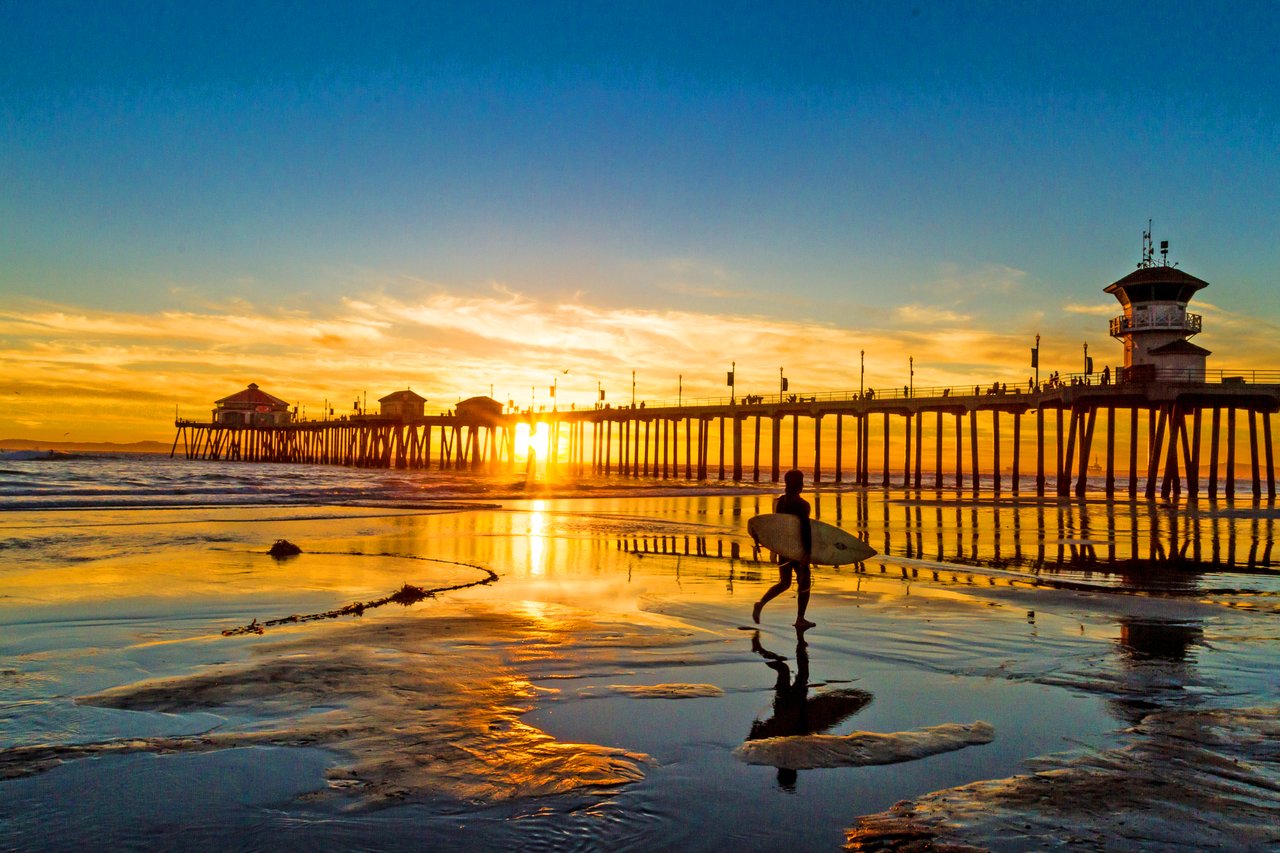
Outdoor recreation is a defining feature of daily life in Huntington Beach. The city’s expansive coastline anchors its recreational identity, with wide beaches that support surfing, swimming, beach volleyball, jogging, and casual recreation year-round. The Huntington Beach Pier and adjacent beachfront areas also serve as social and cultural gathering points.
Beyond the shoreline, the city maintains an extensive system of parks, greenbelts, and trails that integrate seamlessly into residential neighborhoods. The flat terrain makes walking and cycling especially accessible, supported by dedicated bike paths that connect inland areas to the coast. These routes are used both for recreation and daily commuting, reinforcing an active lifestyle.
Bolsa Chica Ecological Reserve stands out as a unique natural asset. This protected wetland offers walking trails, wildlife observation, and open views that contrast with the surrounding urban environment. It provides residents with access to nature without leaving the city, adding ecological and recreational value.
Local parks and playgrounds are distributed throughout Huntington Beach, serving families and community groups with sports fields, play areas, and open lawns. Golf courses and organized recreational facilities further expand options for structured outdoor activity. Taken together, the city’s recreational offerings support a lifestyle focused on health, accessibility, and year-round outdoor engagement rather than seasonal or destination-based use.
Huntington Beach’s local culture is shaped by a strong coastal identity anchored in surf heritage, outdoor living, and an emphasis on personal freedom and informality. Surfing is not simply a recreational activity but a defining cultural thread that influences everything from local businesses and public art to community events and daily routines. Even for residents who do not surf, the sport’s ethos—early mornings, ocean awareness, and respect for nature—permeates the city’s lifestyle.
Daily life in Huntington Beach tends to revolve around the outdoors. Residents commonly structure their schedules around beach access, fitness, and social activities that take advantage of the climate. Casual dress, functional design, and an unpretentious atmosphere dominate, reinforcing the city’s reputation as relaxed and approachable rather than polished or exclusive.
There is also a strong sense of local pride and community continuity. Many residents have long-term ties to the area, contributing to stable neighborhoods and established traditions. Small businesses, surf shops, and locally owned restaurants play an important role in maintaining this identity, balancing the presence of visitors with a lived-in, residential character.
Overall, Huntington Beach culture prioritizes balance—between recreation and routine, individuality and community, and coastal living and everyday practicality.
Huntington Beach hosts several high-profile annual events that reinforce its cultural identity and attract both residents and visitors. These events are closely tied to the city’s surf heritage, beachfront setting, and community-centered traditions.
The most prominent event is the US Open of Surfing, held each summer near the Huntington Beach Pier. It is one of the largest surf competitions in the world and brings professional athletes, spectators, and international attention to the city. Beyond competition, the event includes music, exhibitions, and brand activations, creating a festival-like atmosphere along the waterfront.
Independence Day celebrations are another major highlight. Huntington Beach is known for hosting one of the largest Fourth of July parades west of the Mississippi, followed by beach activities and fireworks. The event reflects the city’s strong civic engagement and draws widespread local participation.
Additional community events occur throughout the year, including surf-related contests, holiday celebrations, and seasonal markets. These gatherings tend to emphasize outdoor settings, local participation, and family-friendly programming rather than large-scale commercial festivals. Collectively, they reinforce Huntington Beach’s identity as an active, tradition-oriented coastal community rather than a purely tourist-driven destination.
Huntington Beach offers a well-established educational environment that supports families seeking long-term residency. Public schools are primarily served by the Huntington Beach Union High School District and several local elementary districts, which together provide a full K–12 pathway within the city. Schools are generally well-distributed across neighborhoods, keeping commute times manageable for most families.
At the elementary and middle school levels, families value neighborhood-based campuses and consistent academic programming. Many schools emphasize foundational academics alongside arts, athletics, and extracurricular activities, supporting balanced development rather than narrow specialization. Proximity to schools is often a deciding factor for buyers, as boundaries can influence both daily convenience and resale appeal.
High schools in Huntington Beach are known for comprehensive offerings, including college-preparatory coursework, career technical education, and competitive athletics. Advanced placement courses and specialized programs are available, appealing to families focused on academic readiness and postsecondary pathways.
Private school options exist within and near the city, ranging from faith-based institutions to independent preparatory schools. These appeal to families seeking smaller class sizes or specific educational philosophies. Preschools and early learning centers are widely available, particularly in residential and mixed-use areas, supporting working families and early childhood development.
For higher education, Huntington Beach benefits from proximity to several major colleges and universities in Orange County and the greater Los Angeles area. Institutions in nearby cities offer access to undergraduate, graduate, and professional programs, making the area suitable for students, faculty, and households with continuing education needs.
Huntington Beach is well-positioned within Orange County’s transportation network, offering practical access to major employment centers while maintaining a coastal residential setting. The city is served by several key highways, including State Route 1 (Pacific Coast Highway), which runs along the coast, and nearby freeways that connect residents to inland Orange County and Los Angeles.
Inland routes provide access to major north–south and east–west corridors, allowing commuters to reach business hubs such as Irvine, Costa Mesa, and Santa Ana within reasonable drive times, depending on traffic. While commuting patterns are largely car-dependent, the city’s flat layout and arterial roads support predictable travel within local areas.
Public transportation options are available but limited compared to larger metropolitan centers. Bus routes connect Huntington Beach to surrounding cities and transit hubs, supporting regional travel for those who prefer not to drive daily. Rail access is typically reached via neighboring cities, making Huntington Beach more commuter-friendly for drivers than rail-dependent commuters.
Within the city, accessibility is enhanced by extensive bike lanes and pedestrian paths. Many residents use bicycles for short commutes, errands, and recreation, particularly in coastal and centrally located neighborhoods. Overall, Huntington Beach offers convenient regional access while preserving a local, lifestyle-oriented approach to daily movement.
Huntington Beach appeals to residents who want coastal living that feels authentic and livable rather than transient or resort-oriented. The city offers a high quality of life anchored in year-round outdoor access, a mild coastal climate, and neighborhoods designed for long-term residency. Daily life is shaped by proximity to the beach, bike paths, parks, and open space, allowing residents to integrate recreation into normal routines rather than treating it as an occasional luxury.
Convenience is a major draw. Huntington Beach balances its beach-town identity with practical infrastructure, including shopping centers, schools, healthcare, and commuter access to major employment hubs across Orange County. Emotionally, the city resonates with buyers seeking a slower, healthier pace without sacrificing connectivity. Many residents value the sense of space, light, and consistency that comes from living near the ocean, even if they rarely engage in tourist-oriented activities.
Demand within Huntington Beach varies significantly by micro-location, with buyers often targeting specific streets or enclaves rather than broad areas. Coastal neighborhoods west of Pacific Coast Highway are among the most sought-after, particularly streets within walking distance of the beach that still offer relative privacy. These areas appeal to buyers prioritizing lifestyle, walkability, and ocean proximity.
Harbor-adjacent communities near Huntington Harbour attract buyers seeking waterfront living, boating access, and a quieter residential feel. These estates often command premium pricing due to limited supply and their distinct lifestyle offering. Downtown-adjacent streets near Main Street appeal to those who value walkability to dining and entertainment, while still wanting a residential base.
Inland, certain planned communities and established residential tracts are favored for their larger lots, parks, and neighborhood cohesion. These areas tend to attract long-term homeowners who prioritize space, parking, and proximity to schools over immediate beach access. Across the city, quiet streets, cul-de-sacs, and homes backing to greenbelts or open space consistently outperform broader market averages.
Huntington Beach is best suited for buyers who value lifestyle consistency, outdoor access, and long-term livability over novelty or exclusivity. It appeals to families seeking stable neighborhoods, professionals who want coastal proximity without sacrificing commute access, and retirees or downsizers who prioritize climate and activity over home size.
The city is also well-matched for buyers who want a strong sense of identity and community rather than a purely transactional real estate market. Those expecting ultra-urban density, heavy nightlife, or resort-style anonymity may find other coastal cities a better fit. For buyers seeking a balanced coastal lifestyle rooted in everyday living, Huntington Beach remains a compelling and enduring choice.
There's plenty to do around Huntington Beach, including shopping, dining, nightlife, parks, and more. Data provided by Walk Score and Yelp.
Explore popular things to do in the area, including Entertainment Cafe, Vingate Clothing and Gifts, and Atlas Stone Fitness.
| Name | Category | Distance | Reviews |
Ratings by
Yelp
|
|---|---|---|---|---|
| Shopping | 0.93 miles | 0 reviews | 0/5 stars | |
| Shopping | 0.94 miles | 0 reviews | 0/5 stars | |
| Active | 0.25 miles | 0 reviews | 0/5 stars | |
| Active | 0.73 miles | 0 reviews | 0/5 stars | |
| Active | 1.02 miles | 0 reviews | 0/5 stars | |
| Beauty | 0.54 miles | 9 reviews | 3.2/5 stars | |
| Beauty | 0.63 miles | 0 reviews | 0/5 stars | |
| Beauty | 0.68 miles | 0 reviews | 0/5 stars | |
| Beauty | 0.68 miles | 0 reviews | 0/5 stars | |
| Beauty | 0.69 miles | 0 reviews | 0/5 stars | |
| Beauty | 0.69 miles | 0 reviews | 0/5 stars | |
| Beauty | 0.69 miles | 7 reviews | 5/5 stars | |
| Beauty | 0.69 miles | 0 reviews | 0/5 stars | |
| Beauty | 0.87 miles | 0 reviews | 0/5 stars | |
| Beauty | 1 miles | 0 reviews | 0/5 stars | |
| Beauty | 1.02 miles | 1 review | 1/5 stars | |
| Beauty | 1.02 miles | 9 reviews | 5/5 stars | |
| Beauty | 1.02 miles | 1 review | 5/5 stars | |
| Beauty | 1.02 miles | 0 reviews | 0/5 stars | |
| Beauty | 1.02 miles | 0 reviews | 0/5 stars | |
| Beauty | 1.02 miles | 0 reviews | 0/5 stars | |
| Beauty | 1.02 miles | 0 reviews | 0/5 stars | |
| Beauty | 1.02 miles | 0 reviews | 0/5 stars | |
| Beauty | 1.02 miles | 0 reviews | 0/5 stars | |
|
|
||||
|
|
||||
|
|
||||
|
|
||||
|
|
||||
|
|
Huntington Beach has 77,549 households, with an average household size of 2.51. Data provided by the U.S. Census Bureau. Here’s what the people living in Huntington Beach do for work — and how long it takes them to get there. Data provided by the U.S. Census Bureau. 196,010 people call Huntington Beach home. The population density is 7,260 and the largest age group is Data provided by the U.S. Census Bureau.
Total Population
Population Density Population Density This is the number of people per square mile in a neighborhood.
Median Age
Men vs Women
Population by Age Group
0-9 Years
10-17 Years
18-24 Years
25-64 Years
65-74 Years
75+ Years
Education Level
Total Households
Average Household Size
Average individual Income
Households with Children
With Children:
Without Children:
Marital Status
Blue vs White Collar Workers
Blue Collar:
White Collar: