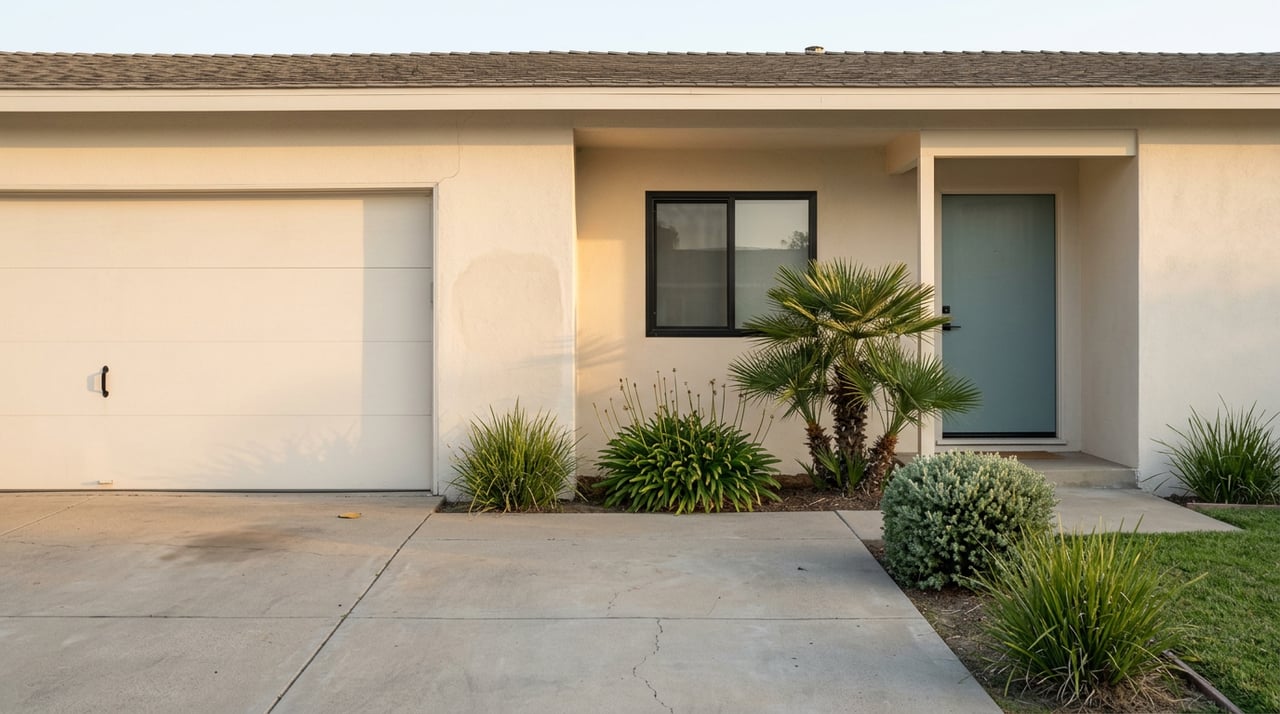
A well-kept four-bedroom in Greenbrook goes under contract in nine days. The kitchen's been refreshed, the yard is tidy, the comps line up. Then the inspector pulls the panel cover during the contingency period and stops talking about square footage. What comes next isn't a roof estimate or a foundation crack. It's a question about wire color.
That scene plays out often enough in Fountain Valley's original tracts that it's worth naming directly: the thing most likely to stall a sale here isn't cosmetic and it isn't structural. It's what's behind the walls, and it traces back to a very specific slice of the calendar.
A City Built in One Tight Window
Most of Fountain Valley's housing went up fast, between 1962 and 1978, on lots that still run 6,000 to 8,500 square feet across the city's original tracts. That's not a rough estimate from a national database. It's how a pool and remodeling contractor working across every major Fountain Valley tract describes the city's build-out today, naming the specific neighborhoods it works in: the Mile Square Park area, Heritage Park, Green Valley, Greenbrook, Tiburon, and Westmont. Greenbrook alone is a defined community of 474 homes near the city's southwestern edge, built around Courreges Elementary and still run by its own homeowners association today.
That sixteen-year building window matters more than it looks like it should, because it lines up almost exactly with a materials shortage that had nothing to do with Orange County. During the mid-1960s and into the early 1970s, copper prices spiked nationally, and homebuilders across the country switched to aluminum wiring for branch circuits as the cheaper option. Fountain Valley wasn't spared that shift. It was built squarely inside it.
Why the Wiring Doesn't Show Up Until Someone Opens the Panel
Aluminum wiring by itself isn't automatically a hazard. The trouble shows up at the connections, where aluminum oxidizes differently than copper and can loosen at outlets, switches, and the panel over time. That's also exactly why it stays invisible during a normal walkthrough. Nobody buying a home stops to inspect a switch plate. A licensed electrician has to open things up, and that usually doesn't happen until an inspection contingency, an insurance underwriter, or a lender's appraiser asks for it.
By the time one of those three parties raises it, the seller is already in escrow, on a clock, with a buyer who has their own opinions about who pays for what.
The stakes aren't hypothetical. A 2011 U.S. Consumer Product Safety Commission report found that homes with aluminum wiring were 55 times more likely to have at least one outlet connection reach fire hazard conditions than homes wired with copper. That single stat is the reason some insurance companies charge higher premiums or decline to write a policy on a home with unremediated aluminum wiring at all, and it's why a buyer's lender may hold up funding until an electrician signs off in writing rather than take a seller's word for it.
The Newer Wrinkle: EV Chargers and Pool Equipment
There's a second layer to this that didn't exist ten years ago, and it's specific to what buyers expect now. The same contractor that named Fountain Valley's original tracts also flagged the practical result of that 1960s-70s electrical service: it rarely handles modern pool, spa, kitchen, and EV charging loads, which is why 200-amp panel upgrades have become a routine coordination point on remodel jobs across the city today.
Put plainly: a panel sized for a 1968 dishwasher and a window air conditioner wasn't built for a Level 2 EV charger, an induction range, and pool equipment running at the same time. Buyers touring homes in these tracts increasingly ask about panel amperage before they ask about anything cosmetic, because they already know they're buying a car charger and a heat pump water heater along with the house.
Fountain Valley's market hasn't been forgiving of delay, either. Homes here sold in a median of 28 days over the three months ending in May 2026, with buyers submitting an average of two offers per listing. A market that moves that fast doesn't leave much room for a seller to discover a panel problem after the fact and still hit their timeline.
What Remediation Actually Looks Like
Not every aluminum-wired home needs a full rewire, and it helps to know the difference before an inspection report forces the decision.
| Approach | What it involves | Rough cost | When it's enough |
|---|---|---|---|
| Pigtailing with Alumiconn or Copalum connectors | An electrician replaces the connection at each outlet, switch, and panel termination, splicing a short copper lead onto the existing aluminum wire | Lower cost, priced per connection point | When the wiring itself is intact and only the terminations need updating |
| Full copper rewire | Complete replacement of aluminum branch circuits with copper throughout the home | Roughly $2,000 to $20,000 depending on home size | When a panel upgrade, remodel, or insurer requirement calls for a clean slate |
If time is the constraint, and in a market selling homes in under a month it usually is, pigtailing at every connection point is the method most often used to reduce aluminum wiring risk without tearing open walls. It's also the fix most insurers and appraisers are willing to accept when it's documented by a licensed electrician.
A Pre-Listing Checklist for Fountain Valley's Original Tracts
If your home was built in that 1962-1978 window, a few steps before you list can keep this from becoming a mid-escrow surprise:
- Have a licensed electrician open the panel and a sample of outlets now, not after a buyer's inspector does it for you.
- Get findings in writing. A verbal "it looked fine" doesn't satisfy an underwriter or an FHA or VA appraiser. A signed letter does.
- If you've added a pool, spa, EV charger, or done a kitchen remodel since the original build, confirm the permit history through the City of Fountain Valley's building inspection portal matches any panel upgrade you believe happened.
- Ask directly about panel amperage. Original service in these tracts often wasn't sized for today's appliance and charging loads, and that's a different question than whether the wiring itself is safe.
- Price any remediation into your listing strategy up front rather than negotiating it blind once a buyer's clock is running.
Common Questions From Fountain Valley Sellers
Does every home built in the 1960s or 70s here have aluminum wiring? No. Some homes have a full copper system, some have a mix of aluminum and copper depending on when rooms were added or rewired, and the only way to know for certain is to have it checked rather than assume based on the build year alone.
If the panel itself was already upgraded, am I in the clear? Not necessarily. A panel swap and the branch wiring running through the walls to each outlet are two separate systems. Upgrading one doesn't automatically mean the other was touched.
Does having aluminum wiring mean my home is worth less? Not inherently. The wiring itself doesn't devalue a home the way a foundation issue might. What it does is add a documentation step that sellers who plan ahead can clear before it ever reaches a buyer's inspection report.
Fountain Valley's tract homes have held their value because they were built well and updated by owners who took care of them. The wiring behind the walls is simply a fact of when they were built, not a flaw in how they were kept. Sellers who get ahead of it walk into escrow with an answer already in hand instead of a question they didn't see coming.
If you're weighing a sale in Greenbrook, Green Valley, Tiburon, or anywhere else in Fountain Valley's original tracts, the Lily Campbell Team can walk your specific property through what a panel or wiring question would actually mean for your timeline and your price. Get My Home Value and let's talk through what your listing needs before a buyer's inspector finds it first.
This article is general information, not legal, tax or financial advice. Consult a qualified professional about your situation.