By the Lily Campbell Team
Fountain Valley sits just a few miles from the Pacific, close enough that a salt-tinged breeze finds its way through your windows on the right afternoon. That proximity to the coast is one of the factors that makes living here so appealing, and it naturally inspires the way people decorate their homes. California coastal interior design is not about filling a room with seashells and anchors; it is about capturing a feeling: the ease, the light, and the quiet openness that comes from being near the water. When it is done well, it transforms a home into a place that always feels like a retreat.
The good news is that this aesthetic translates beautifully to the kinds of homes found throughout Fountain Valley. Whether you live in a single-story ranch, a newer build, or an expansive property, the core principles of coastal design work across floor plans and architectural styles. It is less about a specific look and more about a specific feeling: airy, relaxed, layered with natural texture, and flooded with the kind of warm Southern California light that makes everything feel a little more effortless.
This guide will walk you through how to bring that coastal sensibility indoors, room by room and element by element, so your Fountain Valley home reflects the beauty of the environment that surrounds it.
Key Takeaways
- California coastal interior design is built on light, natural texture, and a muted, ocean-inspired color palette rather than obvious nautical decor.
- The right window treatments, flooring, and furniture choices can dramatically shift the feel of a room toward the breezy, open quality of a coastal retreat.
- Layering natural materials like rattan, linen, weathered wood, and stone creates depth without visual clutter.
- Coastal design works in every room, from a bright kitchen with seaside-inspired tile to a bedroom that feels like waking up at a boutique beach hotel.
Start With the Foundation: Color and Light
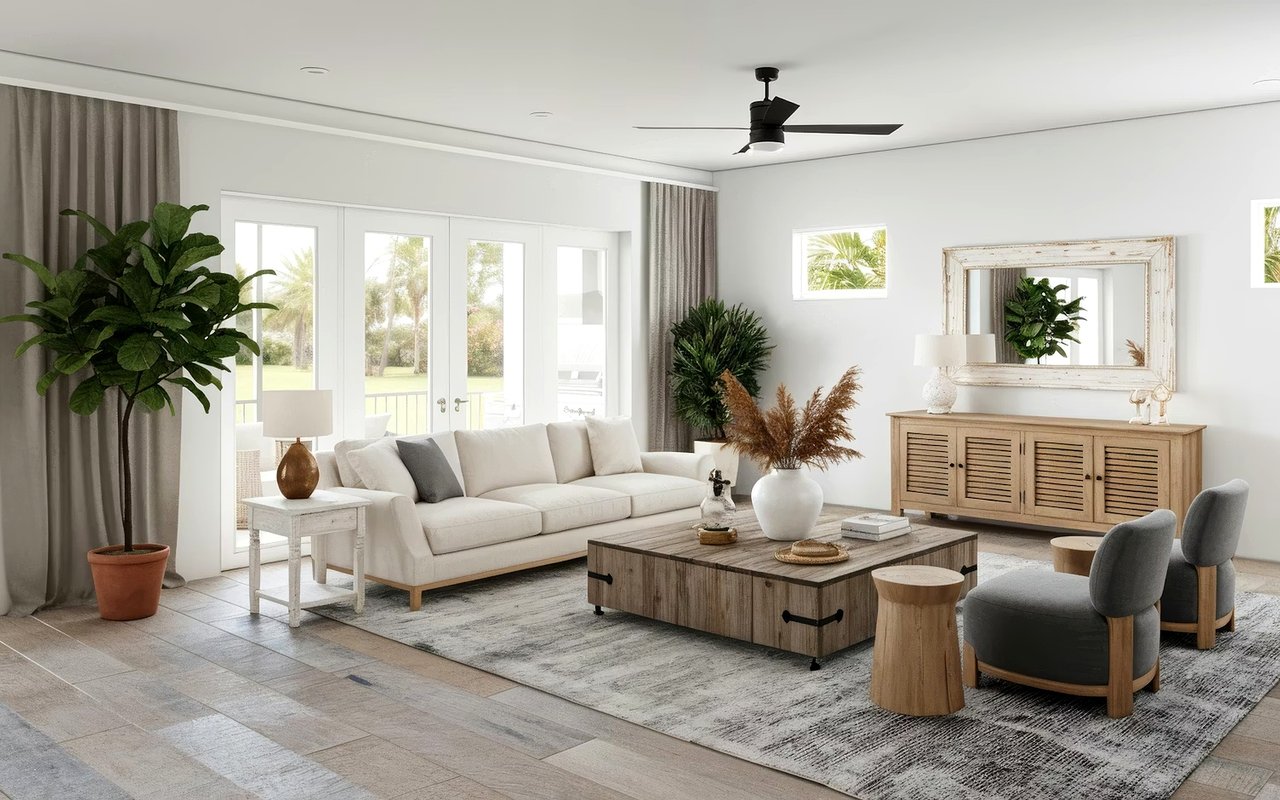
The palette of California coastal design draws directly from the landscape outside your door. Think of the spectrum between the beach and the ocean: pale sand, bleached driftwood, seafoam, soft sage, dusty blue, warm white, and the occasional deep navy as an anchor. These colors work because they reflect and amplify natural light, making rooms feel larger and more serene at the same time.
In Fountain Valley, where sunny days are the norm and homes often have west-facing exposures that catch shimmering afternoon light, leaning into this palette makes practical as well as aesthetic sense. Painting walls in a warm white or a soft greige with blue or green undertones can completely transform a room before you add a single piece of furniture. If you want to introduce more color, do it through accents: a linen sofa in natural flax, curtains in a muted blue-green, or an area rug that echoes the soft gray of wet sand.
Window treatments deserve particular attention in a coastal home. Heavy drapes interrupt the flow of light and make rooms feel closed off, which runs counter to everything the coastal aesthetic is trying to achieve. Instead, opt for sheer linen or cotton panels that filter sunlight without blocking it. Woven wood shades are another excellent choice; they bring in warmth and natural texture while still allowing light to move freely through the room.
In Fountain Valley, where sunny days are the norm and homes often have west-facing exposures that catch shimmering afternoon light, leaning into this palette makes practical as well as aesthetic sense. Painting walls in a warm white or a soft greige with blue or green undertones can completely transform a room before you add a single piece of furniture. If you want to introduce more color, do it through accents: a linen sofa in natural flax, curtains in a muted blue-green, or an area rug that echoes the soft gray of wet sand.
Window treatments deserve particular attention in a coastal home. Heavy drapes interrupt the flow of light and make rooms feel closed off, which runs counter to everything the coastal aesthetic is trying to achieve. Instead, opt for sheer linen or cotton panels that filter sunlight without blocking it. Woven wood shades are another excellent choice; they bring in warmth and natural texture while still allowing light to move freely through the room.
Colors That Work in a Coastal Palette
- Warm white and soft cream on walls to maximize brightness without feeling stark.
- Muted sage or eucalyptus green as an accent color in living areas or bedrooms.
- Dusty, faded blue in shades that reference sky and sea rather than saturated primary tones.
- Sandy neutrals on rugs and upholstery to ground a room without pulling focus.
- Deep navy used sparingly as a grounding accent in pillows, artwork, or a single statement piece of furniture.
Flooring and Natural Materials
Floors set the tone for a coastal interior more than almost any other element. Light-toned hardwood is the classic choice, particularly in wider planks with a matte or lightly distressed finish that references driftwood. White oak, ash, and cerused finishes are all popular in California coastal homes because they are visually cool without feeling cold, and they pair well with both natural fiber rugs and bare feet.
If hardwood is not in the budget or does not suit your current floor plan, luxury vinyl plank in a light wood tone accomplishes much of the same effect at a fraction of the cost. In kitchens and bathrooms, large-format tile in a warm white, soft gray, or pale blue works beautifully. Subway tile with a handmade or slightly irregular finish brings in a relaxed, artisanal quality that feels at home in a coastal setting.
Once you have established the floor, build upward with natural materials throughout the room. Rattan and woven seagrass in furniture, pendant lights, and decorative baskets add texture without weight. Reclaimed or bleached wood on coffee tables, shelving, and bed frames brings in that driftwood quality that is central to the California coastal look. Linen, cotton, and jute in upholstery and textiles keep the room feeling soft and breathable.
If hardwood is not in the budget or does not suit your current floor plan, luxury vinyl plank in a light wood tone accomplishes much of the same effect at a fraction of the cost. In kitchens and bathrooms, large-format tile in a warm white, soft gray, or pale blue works beautifully. Subway tile with a handmade or slightly irregular finish brings in a relaxed, artisanal quality that feels at home in a coastal setting.
Once you have established the floor, build upward with natural materials throughout the room. Rattan and woven seagrass in furniture, pendant lights, and decorative baskets add texture without weight. Reclaimed or bleached wood on coffee tables, shelving, and bed frames brings in that driftwood quality that is central to the California coastal look. Linen, cotton, and jute in upholstery and textiles keep the room feeling soft and breathable.
Natural Materials Worth Incorporating
- Light hardwood or wide-plank LVP flooring in warm neutral tones.
- Rattan accent chairs, pendant lights, or side tables for organic texture.
- Linen upholstery on sofas and chairs that improves with age and wear.
- Jute or sisal area rugs that add warmth and visual interest underfoot.
- Reclaimed or weathered wood on shelving, bed frames, or console tables.
Furniture That Feels Relaxed and Intentional
Coastal furniture should feel substantial enough to be comfortable but light enough that it does not dominate a room. Oversized, overstuffed pieces in dark upholstery work against the airy room that you are trying to create. Instead, look for clean-lined sofas with low profiles, upholstered in linen or a performance fabric in a neutral tone. Slipcovered furniture in natural white or cream is a classic coastal choice that manages to feel both casual and elegant.
The key is to avoid over-furnishing. Coastal rooms breathe. Leave space between pieces, choose furniture with legs rather than pieces that sit directly on the floor, and resist the urge to fill every corner. A well-edited room with a few intentional pieces will always feel more authentically coastal than one that is cluttered with accessories trying to reinforce a theme.
In Fountain Valley, where open floor plans are common in both midcentury and newer construction, this approach to furniture placement pays off especially well. A low sectional oriented toward a large window, a rattan chair in a reading corner, and a simple linen bench at the foot of a bed are all the furniture a room needs when the materials and light are doing the heavy lifting.
The key is to avoid over-furnishing. Coastal rooms breathe. Leave space between pieces, choose furniture with legs rather than pieces that sit directly on the floor, and resist the urge to fill every corner. A well-edited room with a few intentional pieces will always feel more authentically coastal than one that is cluttered with accessories trying to reinforce a theme.
In Fountain Valley, where open floor plans are common in both midcentury and newer construction, this approach to furniture placement pays off especially well. A low sectional oriented toward a large window, a rattan chair in a reading corner, and a simple linen bench at the foot of a bed are all the furniture a room needs when the materials and light are doing the heavy lifting.
Furniture Choices That Support a Coastal Aesthetic
- Low-profile sofas with clean lines, upholstered in linen or performance fabric.
- Slipcovered pieces in natural white or undyed cotton for a relaxed but refined look.
- Furniture on legs rather than pieces with solid bases to maintain visual lightness.
- A mix of seating heights to create visual interest without introducing visual chaos.
- Occasional pieces in rattan, woven seagrass, or weathered wood to layer natural texture.
FAQs
What Makes California Coastal Design Different From Traditional Nautical Decor?
California coastal design is defined by restraint, natural materials, and a muted palette rather than by overt nautical references like anchors, ropes, or navy-and-white stripes. The goal is to evoke a feeling of living near the water rather than to fill a room with symbols of it.
How Do I Incorporate Coastal Design Without It Feeling Like a Theme?
Focus on materials and palette rather than motifs. When a room is built on light wood floors, linen upholstery, natural fiber rugs, and a palette of warm neutrals with soft blue-green accents, it reads as coastal without relying on any single decorative element to make the point.
Can I Mix Coastal Design With Other Styles?
Absolutely. California coastal design works well alongside other warm, organic styles, including Scandinavian minimalism, modern farmhouse, and transitional design. The key is to maintain the light palette and natural materials as the foundation while allowing other elements to complement rather than compete with them.
Your Home Is Already Halfway There
Living in Fountain Valley means you already have access to one of the most important elements of California coastal design: the light, the air, and the geography of Southern California's coastline just miles from your front door. The design choices you make inside your home are simply an extension of what is already happening outside it.
Whether you are preparing to put your home on the market or simply ready to fall back in love with the space you are living in, a coastal refresh can make a meaningful difference in how your home looks and feels. If you are also thinking about buying or selling in Fountain Valley and want guidance on what moves the needle in this market, reach out to us at the Lily Campbell Team. We are here to help you navigate every part of the process, from first showing to final signature.
Whether you are preparing to put your home on the market or simply ready to fall back in love with the space you are living in, a coastal refresh can make a meaningful difference in how your home looks and feels. If you are also thinking about buying or selling in Fountain Valley and want guidance on what moves the needle in this market, reach out to us at the Lily Campbell Team. We are here to help you navigate every part of the process, from first showing to final signature.